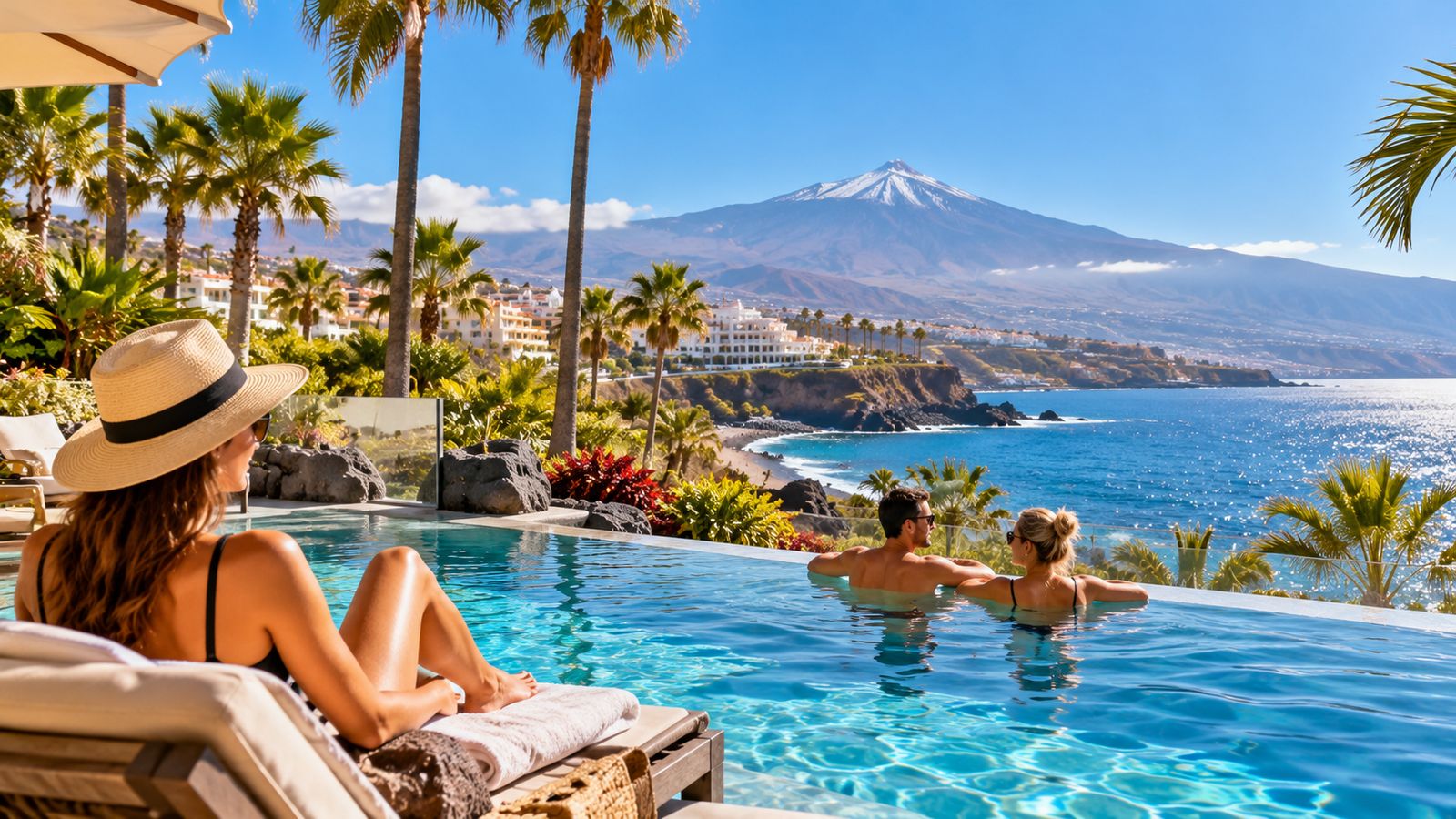
Escape the cold. Discover an island where winter feels completely different.
Imagine swapping grey skies and heavy coats for palm trees, ocean views and lunch outdoors. That is the attraction of Tenerife in winter.
But is it actually warm enough to swim, sunbathe and enjoy a proper beach holiday? Often, yes, especially in the south, but Tenerife's microclimates matter. Where you stay can change the experience significantly.
How warm is Tenerife in winter?
The island has a generally mild subtropical climate. Typical southern-coast daytime highs are approximately:
| Month | Typical average daytime high |
|---|---|
| December | 22–23°C |
| January | 21–22°C |
| February | Around 22°C |
| March | Around 23°C |
These are broad climate averages, not a forecast or a promise of sunshine. Expect cooler evenings, occasional rainy spells and changes in wind. Higher elevations can be dramatically colder.
North or south Tenerife in winter?
Southern Tenerife: beach days and sunshine
Costa Adeje, Los Cristianos and Playa de las Américas tend to offer the most reliable winter sunshine and a broad selection of accommodation and holiday facilities. They suit travellers whose ideal break centres on beaches, outdoor dining and swimming pools.
Northern Tenerife: greenery and character
Puerto de la Cruz, La Orotava, Garachico and the surrounding towns offer historic streets, dramatic volcanic coastlines, local food and lush scenery. The north is generally cloudier and wetter in winter, but that is part of why it looks so green.
If sunshine is your single biggest priority, start by considering the south. If culture, villages and exploration rank higher, don't overlook the north.
Can you swim in the sea in December or January?
Yes, people swim all year, but the sea is not tropical. Atlantic water is often approximately 19–21°C in the colder months, and some visitors find that chilly.
Conditions change by beach. A calm-looking natural pool can become dangerous when swell increases. Follow beach flags, local restrictions and lifeguards.
For families or travellers who prefer warmer water, a heated hotel or apartment pool can make a real difference.
Are hotel pools heated in winter?
Some are, but never assume every pool is heated. Before booking, ask:
- Is heating active throughout the exact travel dates?
- Which pools are heated, including children's pools?
- What temperature is usually maintained?
- Are any pool areas closed for maintenance?
- Is heating included in the price?
A lovely pool photograph taken in summer doesn't tell you how comfortable a January swim will feel.
The best areas for a winter break
- Costa Adeje: premium accommodation, beaches and good facilities.
- Los Cristianos: walkable waterfront, restaurants and convenient services.
- Playa de las Américas: entertainment, nightlife and access to beaches.
- Los Gigantes / Puerto de Santiago: dramatic cliff views and a somewhat calmer coastal atmosphere.
- Puerto de la Cruz: northern culture and scenery, with more variable winter weather.
For a detailed comparison, explore where to stay in Tenerife.
Five winter experiences worth planning
Teide National Park: Immense volcanic landscapes that look different in every season. Higher areas may experience snow and road closures, so check conditions and dress warmly.
Historic villages: Discover Garachico, La Orotava or La Laguna on a leisurely day trip.
Whale watching: The southwest coast offers opportunities to observe marine wildlife with authorised, responsible operators.
Local food: Winter is a lovely time to enjoy traditional dishes, cafés and wine experiences.
Stargazing: Tenerife's high-altitude skies can be spectacular when weather, moonlight and local access allow.
What should you pack?
Bring swimwear, sunscreen, sunglasses, comfortable shoes and light daytime clothing. Add a jumper or jacket for evenings and substantial warm layers for mountain excursions. Mild air temperatures do not eliminate strong ultraviolet exposure.
Frequently asked questions
Is Tenerife hot enough for Christmas on the beach?
The south often has pleasant days around Christmas, but beach conditions are not guaranteed. Choose your location and facilities carefully.
Is January a good time to visit Tenerife?
Yes, especially if you want mild weather and outdoor activities instead of northern European winter temperatures.
Does it rain in Tenerife in winter?
Yes. Rain is possible anywhere, and the north generally gets more than the south.
Can children swim in December?
Some comfortably swim in the sea, but heated pools are often a more dependable choice. Consider water temperature, safety and each child's comfort.
Your winter sun, your way
Whether you want a heated pool for the children, an elegant ocean-view stay or a holiday exploring charming villages, Tenerife, Curated starts with your priorities and your budget.